The Inclusive Classroom Inventory
What's Your Inclusive Classroom Score?
SA 3-minute assessment that reveals how intentionally your classroom affirms every student.

3
Minutes

16
Statements

Instant
PDF Delivery


You Show Up for All Your Students.
But Does Your Classroom Feel Like It Belongs to All of Them?
You care deeply about inclusion. You'd never intentionally exclude a student. You believe every child deserves to feel seen, safe, and valued in your room.
But here's the question that keeps even the best teachers up at night:
What do they feel when they enter your room?
Does my classroom actually feel inclusive to every student who walks through that door?
Not just the ones who remind me of myself.
Not just the ones who thrive in traditional school settings.
Not just the ones who know how to navigate the hidden curriculum of school culture.
Every student.
The ones whose names I stumble over.
The ones whose families don't look like mine.
The ones who communicate differently.
The ones who've learned to make themselves small in classrooms that weren't built for them.
What do they feel when they enter your room?
The Gap Between Intention and Impact
---------------------------------------------
Here's what decades of research tell us: students learn best when they feel seen, safe, and valued.
Here's what your heart already knows: you want that for every single one of your students.
But here's the hard truth: the gap between our intentions as teachers and our students' actual experience can be wider than we realize.
Not because we don't care. Because no one ever gave us a mirror.
We plan. We teach. We build relationships. But we rarely stop to ask: What is my classroom actually communicating to the students who are most often marginalized?
The Inclusive Classroom Inventory is that mirror.
What This Assessment Will Reveal
In just 16 simple statements, you'll discover:
Your Inclusive Classroom Score
A clear number that tells you where you stand—not compared to other teachers, but against the practices that research shows actually matter for student belonging.
Where You're Strong
See the areas where your intuition and practice are already creating inclusion. You're likely doing more right than you think.
Where the Gaps Are
Name the specific places where your classroom may unintentionally send messages of exclusion—so you can stop guessing and start fixing.
Your Inclusion Profile
-----------------------------------------
The Conscious Bridge Builder (48–64 points)
You are actively constructing a classroom where belonging is the norm. Your students feel seen. Your next step is moving from intention to systemic embedding—making inclusion automatic, not effortful.
The Emerging Equitable Educator (32–47 points)
You have strong instincts but inconsistent execution. A few key shifts in your classroom environment could transform how your most marginalized students experience your room.
The Unaware Ally (16–31 points)
Your heart is in the right place, but your classroom may unintentionally send messages of exclusion. Small, high-leverage changes can create a profound shift in student belonging.
Your Personalized Next Steps
Not generic advice. Specific, actionable moves tailored to your score and your classroom.
What This Inventory Measures
---------------------------------------------
Curriculum & Materials
Do your texts, examples, and resources reflect the full diversity of your students—and the world?
Classroom Interactions
How do you manage voice, group work, and the hidden social dynamics that shape student experience?
Physical Environment
What do your walls, library, and classroom setup communicate about who belongs here?
Teacher Posture
What assumptions, biases, and habits do you bring to your interactions with students?
What Teachers Are Discovering
---------------------------------------------

"I’ve taught for 12 years and thought I understood inclusion. Question 7 made me rethink—most of my diverse books focus on struggle, not joy. Important stories, yes. But my Black and Brown students also deserve to see themselves as heroes and everyday kids. That question changed how I’ll choose books next year."
— Elementary Teacher, 12 years in the classroom
"I scored in the Emerging Equitable Educator category. At first I was disappointed—I thought I'd be further along. But the feedback was so specific. It didn't say 'do better.' It said 'here are the three areas where your practice is inconsistent.' Now I finally know what to work on instead of just feeling vaguely inadequate."
— Elementary Teacher, 12 years in the classroom
"Question 14 stopped me: 'I am aware of my own implicit biases and actively work to prevent them from shaping my interactions.' I realized I think about my biases, but I don't actively work to prevent them. There's a difference between knowing and doing. This inventory made me see it."
— Elementary Teacher, 12 years in the classroom
"The Unaware Ally category sounds harsh, but honestly? That was me five years ago. I would have scored in the 20s. I took this inventory as a check-in and scored in the 50s. Growth is possible. You just have to be willing to look.""
— Elementary Teacher, 12 years in the classroom
The 16 Questions That Matter
You'll rate yourself on statements like:
My classroom materials regularly feature authors, scientists, and leaders from diverse racial, cultural, and gender backgrounds.
I intentionally select texts and examples that reflect the identities of the specific students in my room, not just diverse representation in general.
My classroom walls, posters, and visuals reflect a range of cultures, family structures, abilities, and identities.
I have a system for learning and correctly pronouncing every student's name—including names outside my cultural familiarity.
When I witness microaggressions or exclusionary language among students, I address them directly rather than letting them slide.
I design group work intentionally to interrupt rather than reinforce social hierarchies among students.
I seek feedback from students and families about whether they feel my classroom is inclusive.
No trick questions. No judgment. Just honest self-assessment that leads to real growth.
This Is For You If...
You want every student in your room to feel like they truly belong
You suspect there are gaps in your inclusive practice but can't quite name them
You're tired of vague "be more inclusive" messaging and want specific feedback
You're brave enough to look honestly at your classroom through your students' eyes
You believe good intentions aren't enough—you want to measure your impact
You're ready to move from hoping you're inclusive to knowing you are
This Is NOT For You If...
You believe your classroom is already as inclusive as it needs to be
You think "inclusion" means treating every student exactly the same
You're not ready to examine your own practice honestly
You're looking for validation that you're already doing enough
You want permission to stop growing
Take the Inventory
3 minutes. 16 statements. One honest look at your inclusive practice.
Enter your email below to begin the Inclusive Classroom Inventory. You'll receive your score, your category, and personalized next steps immediately.
We respect your privacy. Unsubscribe at any time.
Frequently Asked Questions
Approximately 3 minutes. Sixteen statements rated on a simple 1–4 scale.
Yes. Immediately after completing the inventory, you'll receive your total score, your inclusion profile, and specific next steps tailored to your results.
Yes. This inventory exists because teachers deserve to know where they stand without barriers. No credit card required. No hidden upsell (though we'll let you know about the Bridge Builder course if it's a fit).
Yes. Templates, manuals, reflection prompts, and tools are included.
Yes. The Bridge Builder Classroom is available as both in-person and virtual professional development sessions.
Unlike many equity trainings that focus on awareness alone, this course provides structured systems and repeatable strategies for sustainable change.
Yes. The frameworks and tools are designed to support educators at any stage of their professional journey.
A Note From the Creator
---------------------------------------------
I created this inventory because I needed it myself.
Years ago, I thought I was an inclusive teacher. I cared about my students. I built relationships. I would have said my classroom was a place where everyone belonged.
Then a student's parent gently asked me: "Do you have any books with characters who look like my daughter? She's never seen herself in your library."
I looked at my shelves. Author after author. Character after character. All reflecting a world my student didn't live in.
I wasn't an inclusive teacher. I was a well-intentioned teacher with a blind spot.
That question changed everything. It didn't just change my library—it changed how I see my classroom. I started noticing the walls. The examples I used. Whose voices I called on. Whose names I struggled to pronounce.
I started asking instead of assuming.
This inventory is my way of asking you—not to make you feel bad, but to save you the years I spent not seeing.
Take the 3 minutes. See your classroom through your students' eyes. Then let's build something better together.
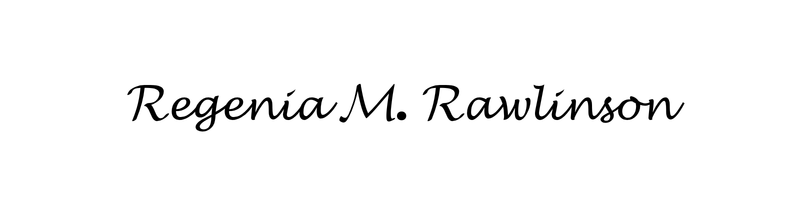
Founder, Bridge Builder Equity in Teaching
Three Minutes Could Change Everything
Not because you'll suddenly become a "perfect" inclusive teacher.
Because you'll finally know.
Know where you're strong.
Know where the gaps are.
Know what to do next.
Your students don't need you to be perfect.
They need you to be paying attention.

Access the Inclusive Classroom Inventory
Enter your email to receive the Inclusive Classroom Inventory PDF and begin reflecting on how your classroom communicates belonging to every student.
We respect your privacy. Your email will only be used to send your resource and occasional teaching insights.